Category: Mountaineering and hiking clubs: joining groups, preparation, and responsible mountain outings Guides

  • How to Compare Hiking and Mountaineering Clubs for Better Mountain Outings

    How to Compare Hiking and Mountaineering Clubs for Better Mountain Outings

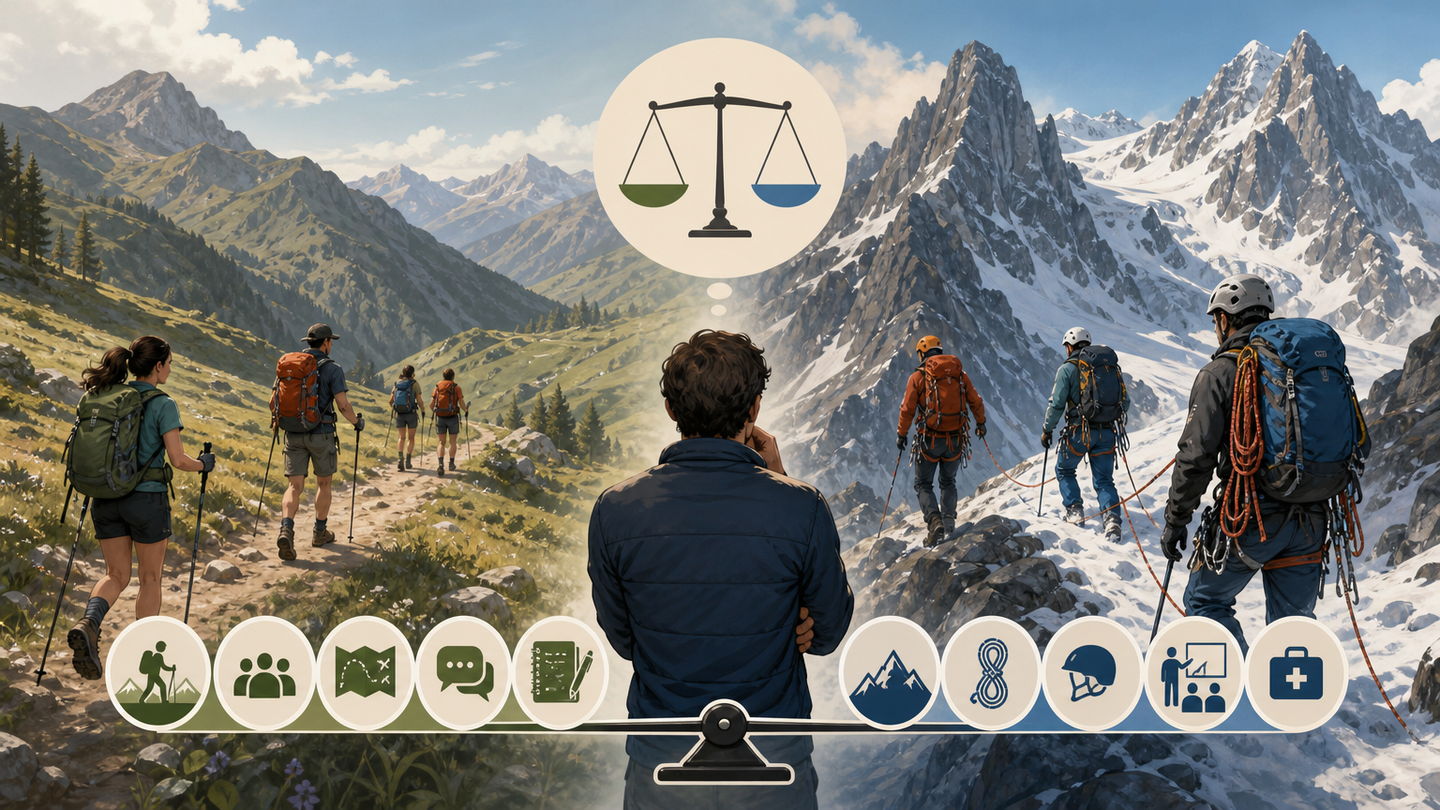
    A club can make mountain travel more social, structured, and approachable—but the word “club” covers very different experiences. One group may organize straightforward day hikes; another may focus on overnight travel; a third may build toward roped climbing on rock, snow, or ice. The best fit is not automatically the most demanding option. It is the group whose activities, expectations, and approach to preparation match your present skills and the outings you genuinely want to do.
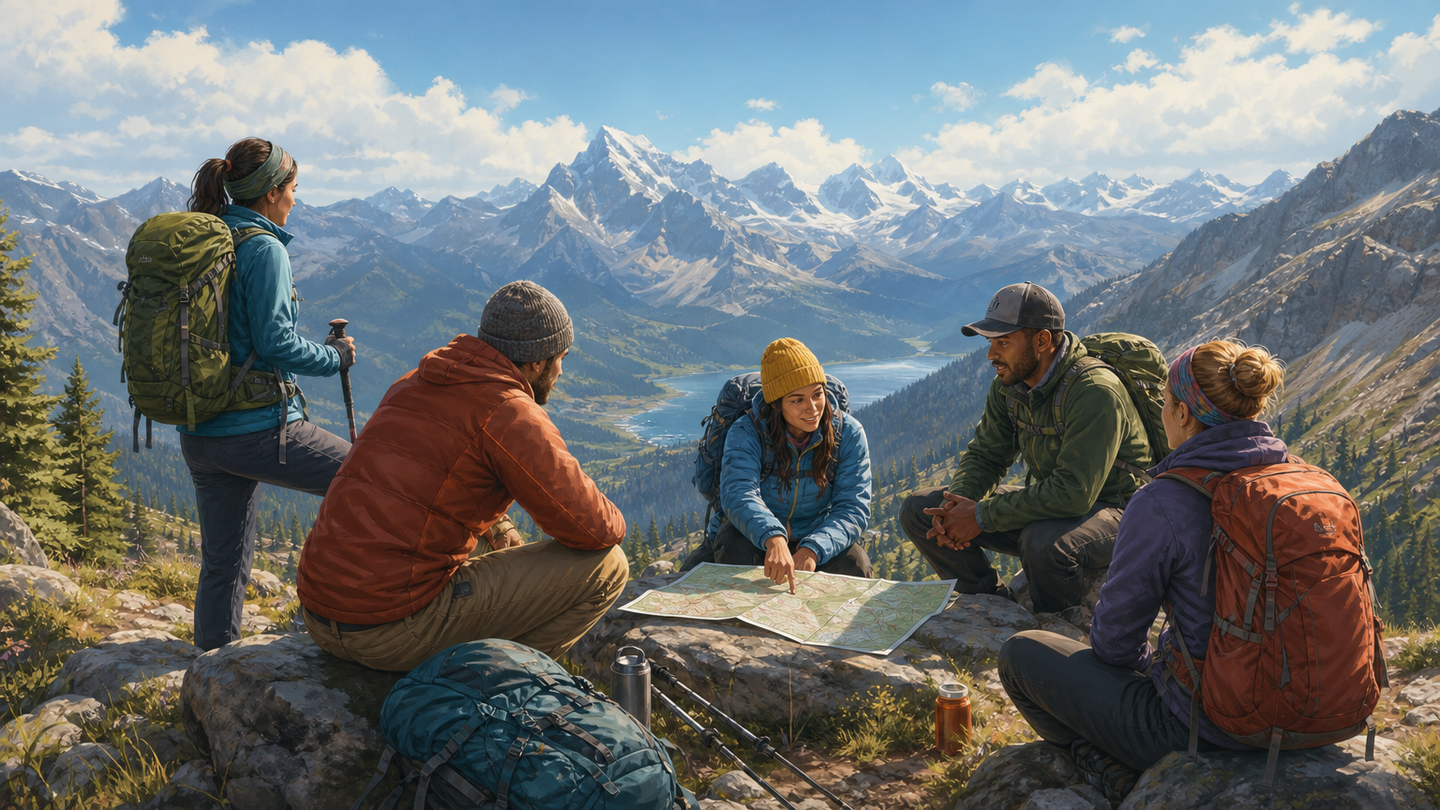
    Supporting editorial scene for How to Compare Hiking and Mountaineering Clubs for Better Mountain Outings
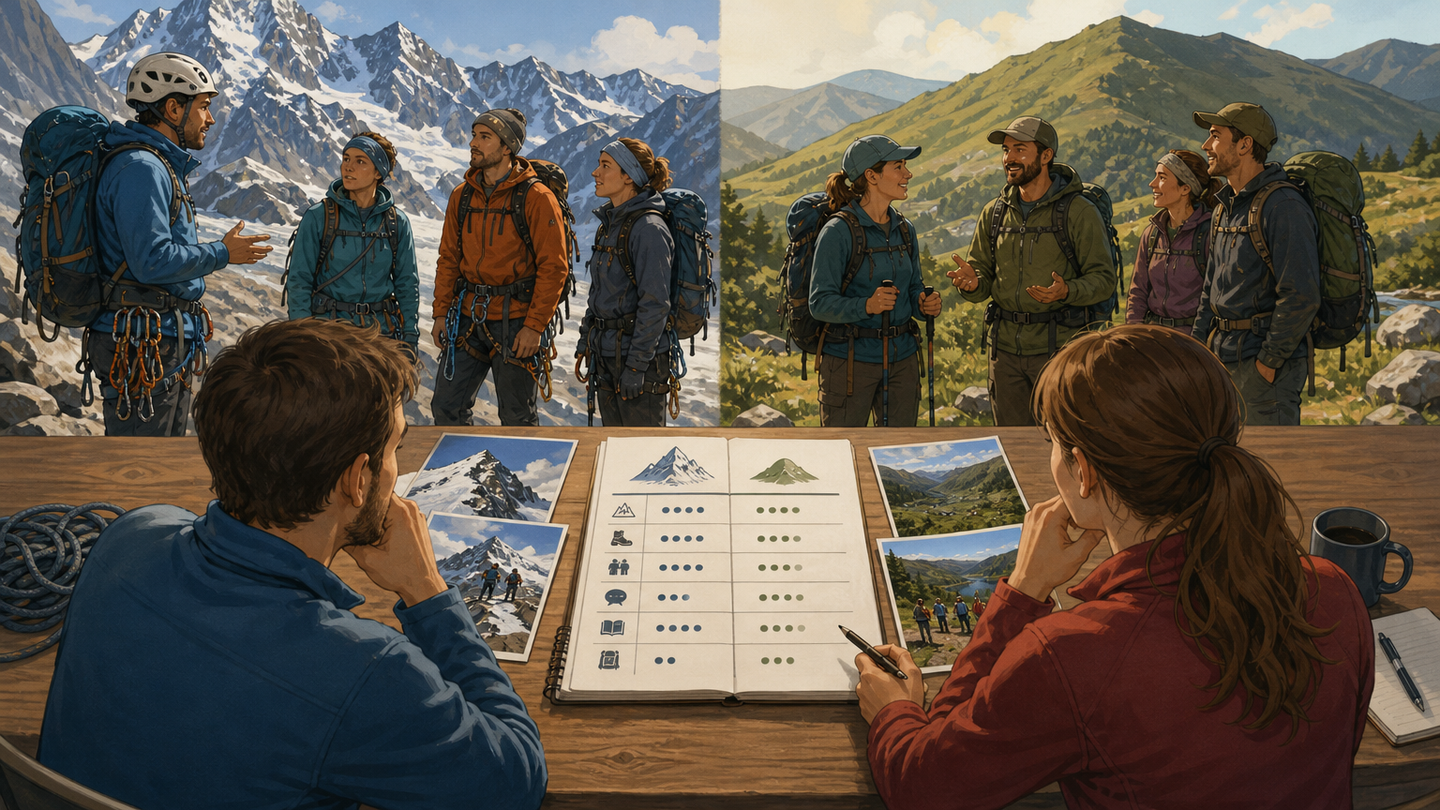
    How to Compare Hiking and Mountaineering Clubs for Better Mountain Outings: supporting editorial illustration.

    Defining the Alternatives

    The first comparison is between the activities themselves. Hiking groups commonly center on day outings over established or informal routes. Backpacking groups add the demands of carrying overnight equipment, managing camps, and traveling for more than a day. Naturalist-oriented outings may put more emphasis on observation and interpretation than on pace or distance.

    Mountaineering and technical climbing groups operate differently. Roped climbing on rock, snow, and ice involves specialized skills and equipment, and technical activities often have prerequisites. That does not make them better than hiking groups; it means the margin for joining before you are ready is smaller. A good progression can be to build comfort with hiking, navigation, weather decisions, and mountain travel before committing to activities that require technical systems.

    Within a single organization, these categories may coexist. Do not assume that joining a mountaineering club means every outing is technical, or that a hiking club offers only easy walks. Read each activity description as its own invitation rather than relying on the organization’s name.

    Meaningful Differences to Compare

    How clearly trips are described

    A useful trip listing tells you far more than a destination. Look for distance, elevation gain, anticipated pace, notable challenges, necessary gear, required skills, and conditioning expectations. These details reveal the real character of the day.

    Distance alone is a weak comparison tool. A shorter route can be harder than a longer one when it is steep, rough, exposed, or undertaken with a heavier pack. Terrain, elevation gain, exposure, pack weight, and the skills needed to move safely all change what “difficult” feels like. Two outings with the same distance can therefore suit entirely different participants.

    Trip ratings can help, but only when paired with the full description. Some organizations use a multi-level rating system; others describe difficulty in plain language. In either case, treat the rating as a starting point and examine the pace, terrain, equipment, and expectations behind it.

    How leaders communicate expectations

    Well-run group outings make the plan understandable before the trailhead. Participants should be able to learn the destination, intended pace, timetable, expected conduct, applicable rules, and what the leader expects the group to carry and know.

    For a first outing, it is reasonable to have a direct conversation with the leader about difficulty, gear, logistics, and whether the activity suits your experience. This is not a test of bravado. It is a practical way to avoid joining a trip whose demands are unclear or beyond your current ability.

    Also notice whether the group distinguishes between a social hike, a strenuous mountain day, an overnight trip, and a technical objective. Clear boundaries help participants choose appropriately and help leaders manage the group responsibly.

    How the club approaches learning

    Some people want an immediate community for regular hikes. Others want a longer learning path that may eventually include backpacking, snow travel, or technical climbing. Compare clubs according to the opportunities they actually offer, not the identity you hope they will provide.

    A group with skill prerequisites may be the right choice if you want structured progression and are willing to meet its expectations. A hiking-focused group may be the better choice if your priority is fitness, companionship, route familiarity, or learning how to move thoughtfully in the outdoors. Neither path is a lesser version of the other.

    Practical Tradeoffs: Challenge, Preparation, and Group Fit

    The central tradeoff is between ambition and readiness. A more challenging trip can be rewarding, but it asks more of every participant: fitness, judgment, clothing, food, water, navigation awareness, and the ability to cope when the plan changes. Choose an outing based on the toughest relevant feature—not the most appealing feature in the description.

    Before committing, consider the route’s distance, elevation gain, terrain, likely weather, available time, alternate routes, and your own condition and experience. Think about how you perform after several hours of sustained effort, not just how you feel at the beginning of a walk. If the answer is uncertain, selecting a less demanding outing is a sound decision, not a missed opportunity.

    Preparation remains personal even when you are traveling with a club. Study the map and terrain, understand the basic plan, and let someone outside the outing know where you expect to be. Carry the Ten Essentials as systems for dealing with injury, changing weather, and unexpected emergencies. A phone can be useful, but service and battery life are not guaranteed, so it does not replace essential equipment or planning.

    Groups should never be treated as a substitute for self-reliance. Rescue may be delayed or unavailable, and every participant should be ready for an unplanned problem rather than assuming another person will solve it. That mindset makes the group stronger: people arrive better equipped, communicate earlier, and make more realistic decisions.

    Group size is another practical consideration. Limits and rules can vary by place and by type of travel, including day use, overnight use, and cross-country travel. A large affiliated group cannot necessarily sidestep a limit by dividing into smaller parties that follow the same route at the same time. Choose clubs and trips that take local rules seriously and organize within them.

    Making the Decision

    Start with the kind of outing you can complete comfortably and responsibly now. If you are new to group travel, a clearly described day hike with an attainable pace is often a useful first experience. It lets you see how a club communicates, how the group moves, and whether its culture suits you without adding the weight and complexity of an overnight or technical objective.

    Then compare prospective clubs through a few practical questions:

    • Are activities separated clearly by hiking, backpacking, and technical requirements? – Do postings explain distance, elevation gain, pace, terrain, gear, and required skills? – Can you discuss fit with a leader before participating? – Does the group communicate a plan and expectations clearly? – Does its style of outings match the challenge level and learning path you want?

    Once you join an outing, contribute to the experience rather than consuming it. Arrive prepared, follow the agreed plan, communicate early if you are struggling, and respect the leader’s decisions about pace or turnaround. Responsible mountain recreation also means applying the seven Leave No Trace principles: plan ahead, travel and camp thoughtfully, manage waste, leave what you find, minimize fire impacts, respect wildlife, and be considerate of other visitors.

    The right club is the one that gives you a realistic way to grow while treating preparation, communication, and care for the mountain environment as part of every outing. Verify local rules, conditions, access restrictions, and your suitability for a specific activity with official information and qualified local leaders before you go.

    Information may contain errors, omissions, or outdated details. Confirm time-sensitive information with the relevant official or authoritative source.
    Watch: Plan Your Trip

    Plan Your Trip | Planning Essentials Episode 1 | MSC Get Outdoors Series — New Zealand Mountain Safety Council
  • Your First Hiking or Mountaineering Club Outing: What to Expect and How to Prepare

    Your First Hiking or Mountaineering Club Outing: What to Expect and How to Prepare

    Joining a hiking or mountaineering club can make the mountains feel more accessible. A group outing offers shared route planning, a stated objective, and companions who are working toward the same destination. It also asks you to take responsibility for your own preparation. The most satisfying first trip is rarely the most ambitious one; it is the one that matches your present fitness, experience, equipment, and comfort with the day’s demands.

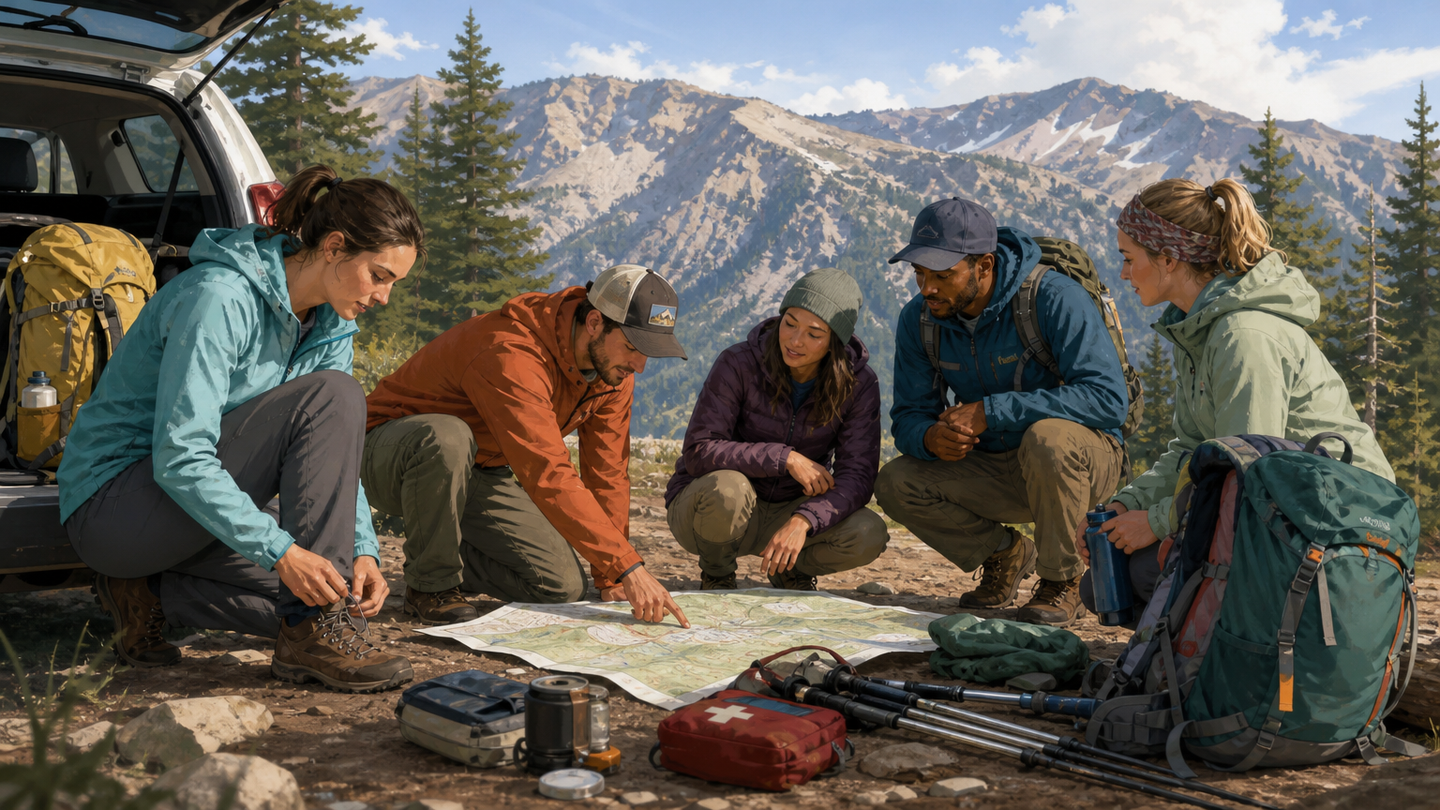
    Supporting editorial scene for Your First Hiking or Mountaineering Club Outing: What to Expect and How to Prepare
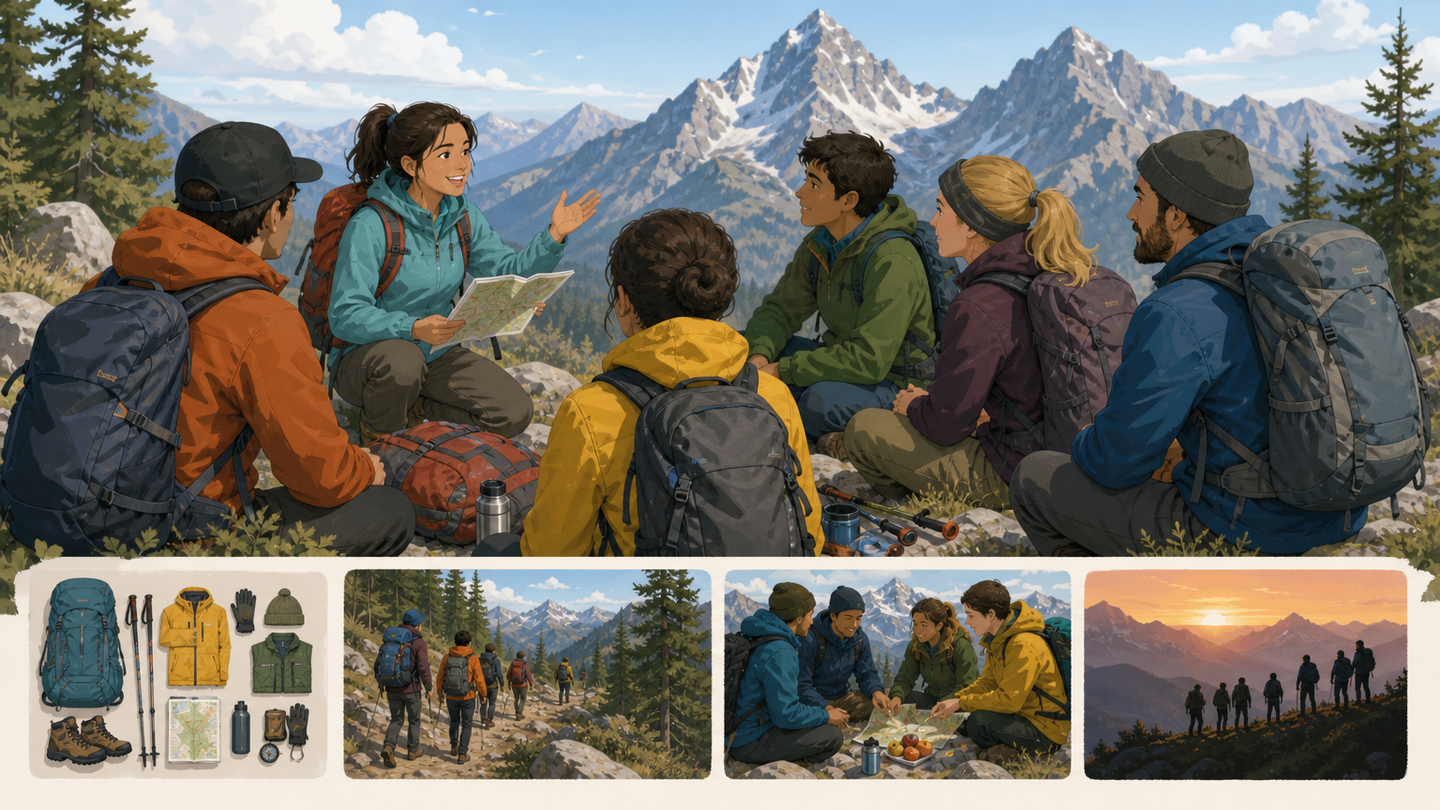
    Your First Hiking or Mountaineering Club Outing: What to Expect and How to Prepare: supporting editorial illustration.

    Before the First Experience: Choose the Right Kind of Outing

    Start by separating hiking from technical mountaineering. Hiking, backpacking, and naturalist activities may be offered as distinct activities, while technical climbing often carries skill prerequisites. Climbing can involve roped travel on rock, snow, or ice, so a listing described as a climb may call for knowledge and equipment beyond what a capable day hiker normally uses.

    For a first club experience, read every part of the trip description rather than focusing only on the destination. A useful posting explains the route’s distance and elevation gain, expected pace, major challenges, required gear, relevant skills, and conditioning expectations. These details show what the day will actually feel like. A modest distance can be demanding on steep ground, rough terrain, or exposed slopes; a longer route may be manageable when the pace and terrain are easier.

    Difficulty labels are helpful starting points, not personal guarantees. A trip’s challenge can change with terrain, steepness, exposure, pack weight, and the skills it requires. Consider the entire combination. Ask yourself whether you can sustain the stated pace while carrying the expected load and still make careful decisions late in the day, when fatigue matters most.

    A good first choice is an outing where you have room to learn rather than one that requires you to prove something. It is sensible to begin with a hike that is within your established ability, then build toward longer, steeper, more remote, or more technical objectives as your experience grows.

    What to Expect From a Well-Run Group

    A club trip is a shared plan, not a collection of individual itineraries. Before the outing, expect communication about the destination, route, timetable, pace, expectations, and rules that apply to the area. On the day, the group may gather at a designated place, review the plan, and move according to the leader’s system for keeping people together.

    Group travel requires flexibility. Weather, trail conditions, a participant’s condition, or slower-than-expected progress can change the plan. Turning around, choosing an alternate route, or ending an objective early is not a failed outing. It is often the sound judgment that preserves the group’s margin for a safe return.

    Leaders organize the trip, but they do not remove outdoor risk or take over each participant’s personal responsibilities. Come ready to follow the agreed plan, communicate early if you are struggling, and make decisions that support the whole group. If you discover that the trip is not a fit before it begins, withdrawing is more considerate than hoping the group can absorb a mismatch on the trail.

    Prepare for the Day You May Have, Not Only the Day You Expect

    Preparation begins at home. Study the route and terrain, consider the available time and possible alternate routes, account for weather, and leave your plan with someone who is not on the outing. Think through distance, elevation gain, terrain, and the condition and experience of everyone involved—not simply the appeal of the objective.

    Carry the Ten Essentials as a set of systems for dealing with injuries, changing weather, and unexpected emergencies. The exact items should suit the outing, but the point is to be capable if the plan takes longer than expected or conditions deteriorate. A phone can be useful, but it is not a substitute for those essentials: service may be unavailable, and batteries do not last indefinitely.

    Bring the gear the trip requires, and learn how to use it beforehand. Do not make a demanding group outing the first time you test footwear, layers, navigation tools, or a heavily loaded pack. If specialized equipment or skills are listed, treat them as entry requirements rather than optional upgrades. Ask whether a beginner-oriented outing, training opportunity, or less technical trip would be a better place to start.

    Conditioning is equally practical. The goal is not simply to finish the route; it is to travel steadily, stay warm or cool as conditions require, eat and drink, and retain enough energy for the descent or return journey. Build gradually through outings that resemble the demands you plan to take on next.

    Questions Worth Asking Before You Commit

    A brief conversation with a trip leader can clarify whether an outing suits you. Be straightforward about your experience, including what you have done recently, what terrain you know, and any aspect that makes you uncertain. Clear information helps a leader describe the trip accurately and helps you avoid arriving underprepared.

    Useful questions include:

    • What pace does the group intend to maintain? – What route conditions or features are likely to be the hardest? – What equipment is required, and which items must I already know how to use? – Are there skills or conditioning expectations beyond ordinary hiking? – What is the turnaround plan if weather, timing, or group condition changes? – What rules apply to the route, wilderness area, or overnight travel?

    Ask early, listen carefully to the answers, and accept a recommendation to choose a different outing. That is not a judgment on your potential. It is a practical match between today’s preparation and a particular objective.

    Responsible Mountain Travel Is a Group Skill

    Responsible outings protect both people and places. Leave No Trace provides seven principles for outdoor recreation, and their value becomes especially clear with a group: plan ahead, travel and camp thoughtfully, manage waste properly, respect wildlife, and be considerate of other visitors. A club’s presence should not turn a quiet route into a larger impact on the landscape.

    Group size is not merely a social preference. Rules can differ by destination and by type of travel, including day use, overnight travel, and cross-country travel. Do not assume an oversized group can solve a limit by splitting into smaller parties that take the same route on the same day; some wilderness rules specifically restrict that practice for people traveling under a shared affiliation.

    Keep the group informed. Tell the leader promptly if you feel unwell, have equipment trouble, need a break, or notice a developing problem. At the same time, avoid separating from the group without a clear agreement. Good communication lets small issues be addressed while there are still easy options.

    Starting With Confidence

    Your first club outing is an opportunity to learn the rhythms of group travel: reading a trip listing closely, arriving properly equipped, moving at an agreed pace, adapting to conditions, and treating a turnaround as a responsible choice. Choose an objective that leaves capacity for those lessons, contribute to the group with honesty and preparedness, and let experience build one well-matched outing at a time. Before you go, confirm the current requirements, conditions, access rules, and your suitability with the club and qualified local leaders.

    Information may contain errors, omissions, or outdated details. Confirm time-sensitive information with the relevant official or authoritative source.
    Watch: The Ten Essentials

    What are The Ten Essentials? — REI
  • Mountaineering and Hiking Clubs: Joining Groups, Preparing Well, and Going Responsibly

    Mountaineering and Hiking Clubs: Joining Groups, Preparing Well, and Going Responsibly

    Mountaineering and hiking clubs bring people together for everything from straightforward day walks to backpacking, naturalist outings, and technical climbing. They can make mountain travel more social and more structured, but a group does not remove the need for personal judgment or preparation. In particular, technical climbing may involve roped travel on rock, snow, or ice and often has skill prerequisites, while hiking activities may call for a different level of experience and equipment. The right club outing is one that matches the route, conditions, and expectations with your own abilities.

    Supporting editorial scene for Mountaineering and Hiking Clubs: Joining Groups, Preparing Well, and Going Responsibly
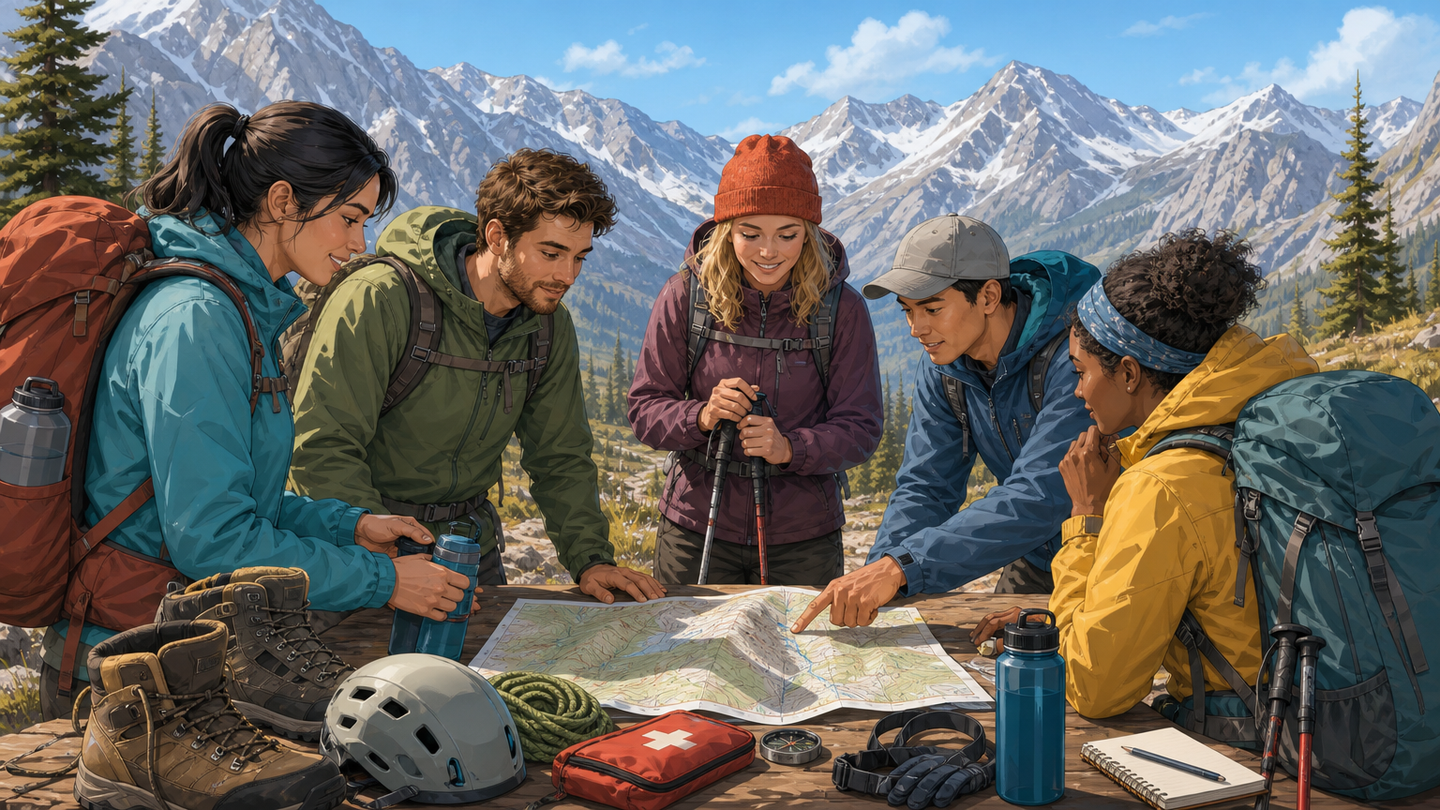
    Mountaineering and Hiking Clubs: Joining Groups, Preparing Well, and Going Responsibly: supporting editorial illustration.

    What Clubs Add to Mountain Recreation

    A good club creates a framework for people to travel together with a shared plan. That framework commonly includes a destination, intended pace, timetable, expectations, and applicable rules. It gives participants a clearer picture of what the day is meant to involve and helps the group move with purpose rather than as a collection of unrelated hikers.

    Clubs also offer a useful progression. A person curious about mountain recreation may begin with hiking or naturalist activities, then gain comfort with route planning, outdoor systems, and group travel before considering more technical objectives. This progression matters because “mountaineering” can describe very different experiences. A hike on a maintained route is not interchangeable with an outing that involves steep terrain, exposure, snow, ice, or roped climbing.

    The social value is real, but it should not be mistaken for a guarantee of safety. Each participant remains responsible for arriving prepared, communicating honestly, following agreed group practices, and making prudent decisions. Emergency planning should assume that help may not be immediate rather than treating rescue as part of the itinerary.

    Choosing a Group and Outing That Fit

    Start by looking at the kinds of activities a club offers. A broad program may separate hiking, backpacking, and naturalist activities from technical activities with specific skill expectations. That distinction is helpful: it lets you choose an experience that reflects where you are now rather than where you hope to be eventually.

    Then read each trip description closely. The most informative postings describe the route distance, elevation gain, expected pace, terrain, notable challenges, required gear, relevant skills, and conditioning expectations. Together, those details tell a more useful story than a short label such as “moderate” or “challenging.”

    Difficulty is not a single measurement. Distance matters, but so do steepness, exposure, terrain, the weight of your pack, and the skills the outing requires. A route that seems manageable on paper can become demanding when these factors combine. Consider the entire day: how long you expect to be moving, whether the footing will require concentration, how much climbing is involved, and how the route will feel when you are tired.

    If the posting leaves uncertainty, speak with the trip leader before joining. A practical conversation can clarify the difficulty, equipment, logistics, and expectations. Be candid about your recent experience and current conditioning. This is not a test of confidence; it is how leaders and participants build a group that can travel at a workable pace.

    Do not join a technical outing on the assumption that the group will teach every prerequisite during the trip. Some clubs provide instruction, but an outing may instead assume that participants already have particular skills. Ask what you need to know and demonstrate before committing, then choose an appropriate learning path if the route is beyond your present experience.

    Preparing as a Capable Group Member

    Preparation begins well before the trailhead. Study the route on a map and understand its terrain. Think through the time available, likely weather changes, and alternate routes or turnaround options. Share your plan with someone who is not on the outing, including where the group intends to go and when it expects to return.

    Bring the Ten Essentials as a set of systems for handling injury, changing weather, and unexpected emergencies. The point is not merely to carry items; it is to have the means to navigate, protect yourself from the elements, manage basic first-aid needs, and sustain yourself if plans change. A phone can be useful, but it is not a substitute for these systems: service may be unavailable and battery power may run out.

    Match your clothing, food, water, and gear to the route and expected conditions. The trip posting should guide this decision, especially when it identifies special equipment or skills. Pack deliberately rather than treating another participant’s supplies as your backup plan. Group travel creates opportunities to help one another, but every person should arrive equipped to take care of their own basic needs.

    Physical preparation is equally specific. Conditioning for a route should reflect the distance, elevation gain, anticipated pace, and pack weight. A person comfortable walking on level ground may still struggle with sustained climbing or uneven terrain. Build experience gradually, and select outings that let you finish with control rather than exhaustion.

    Sharing Responsibility Outdoors

    Before setting out, make sure you understand the plan: the destination, intended route, pace, timetable, regrouping approach, and any applicable rules. Ask early if something is unclear. Once underway, communicate changes in energy, comfort, equipment, or concerns before they become a larger problem. A timely conversation is easier for a group to manage than a silent struggle far along the route.

    Responsible group travel also means respecting the place you came to enjoy. The seven Leave No Trace principles provide a practical foundation for outdoor conduct. Plan ahead and prepare; travel and camp on durable surfaces; dispose of waste properly; leave what you find; minimize campfire impacts; respect wildlife; and be considerate of other visitors. These habits protect both the landscape and the quality of other people’s experience.

    Group size rules can vary substantially by destination and by activity. Day hiking, overnight travel, and cross-country travel may be governed differently. Nor is it always acceptable to divide an oversized affiliated group into smaller parties and send them along the same route at the same time. Treat group limits as part of trip design, not as an inconvenience to solve at the trailhead.

    A leader may coordinate the outing, but safe, considerate travel is a shared practice. Stay aware of the group’s pace and cohesion, follow the agreed plan, and avoid pressuring others to continue beyond a sensible turnaround point. The goal is not simply to reach a summit or endpoint; it is to make sound decisions throughout the day.

    Turning Club Participation Into Lasting Mountain Skills

    The best use of a hiking or mountaineering club is active participation. Read the outing description, choose a suitable challenge, prepare thoroughly, show up ready to contribute, and reflect on what the terrain and pace taught you. Over time, that cycle develops a clearer sense of which objectives fit your interests and which skills deserve further attention.

    There will always be uncertainty in mountain travel. Weather can change, routes can feel harder than expected, and a group’s needs may differ from the original plan. Good preparation does not eliminate those realities; it gives you and your companions better options when they arise.

    Before committing to any outing, confirm the current route conditions, access rules, weather, and suitability with the club, land manager, and qualified local leaders. Used thoughtfully, a club can be more than a way to find companions—it can be a setting for steady learning, respectful travel, and mountain days shaped by sound preparation.

    Information may contain errors, omissions, or outdated details. Confirm time-sensitive information with the relevant official or authoritative source.
Share with