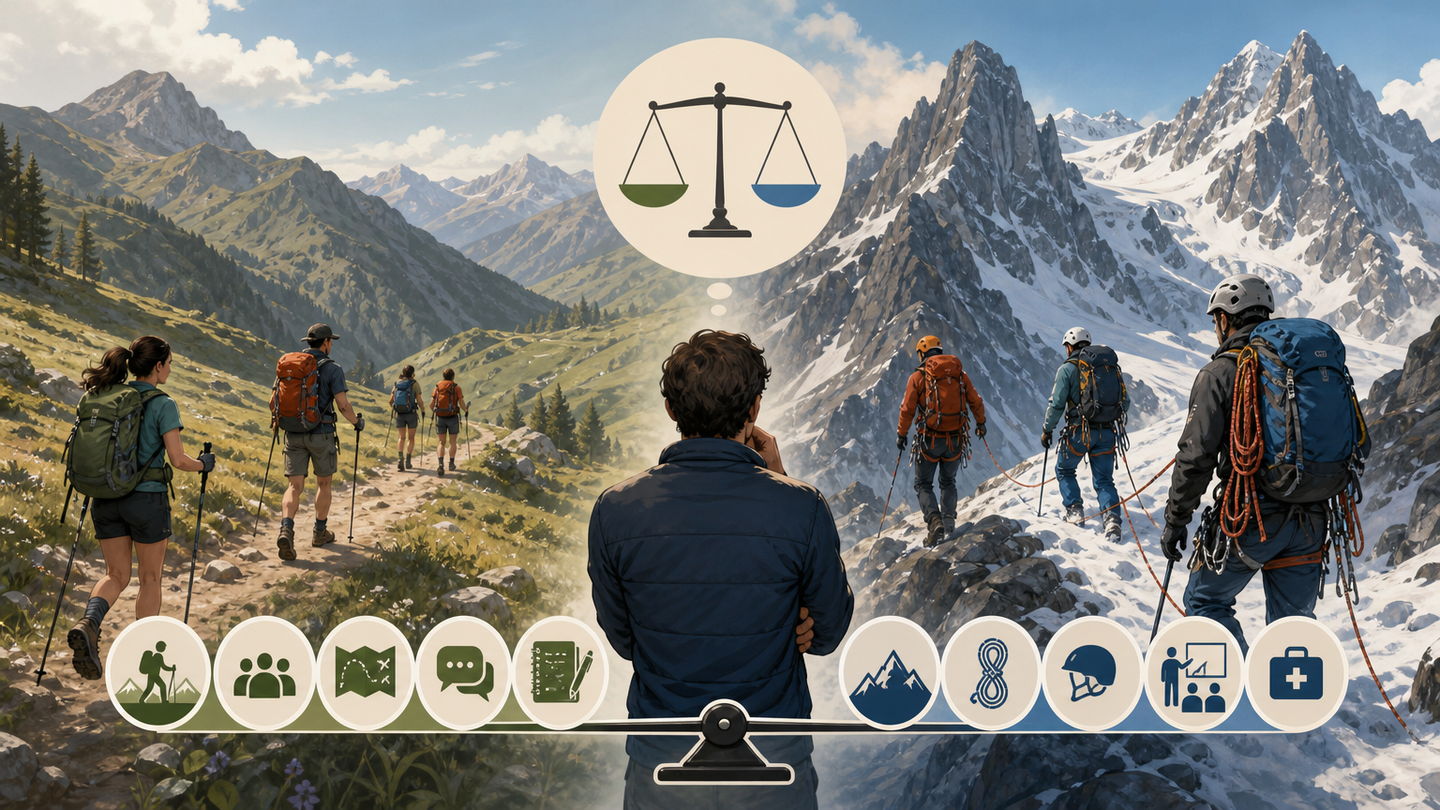
A club can make mountain travel more social, structured, and approachable—but the word “club” covers very different experiences. One group may organize straightforward day hikes; another may focus on overnight travel; a third may build toward roped climbing on rock, snow, or ice. The best fit is not automatically the most demanding option. It is the group whose activities, expectations, and approach to preparation match your present skills and the outings you genuinely want to do.
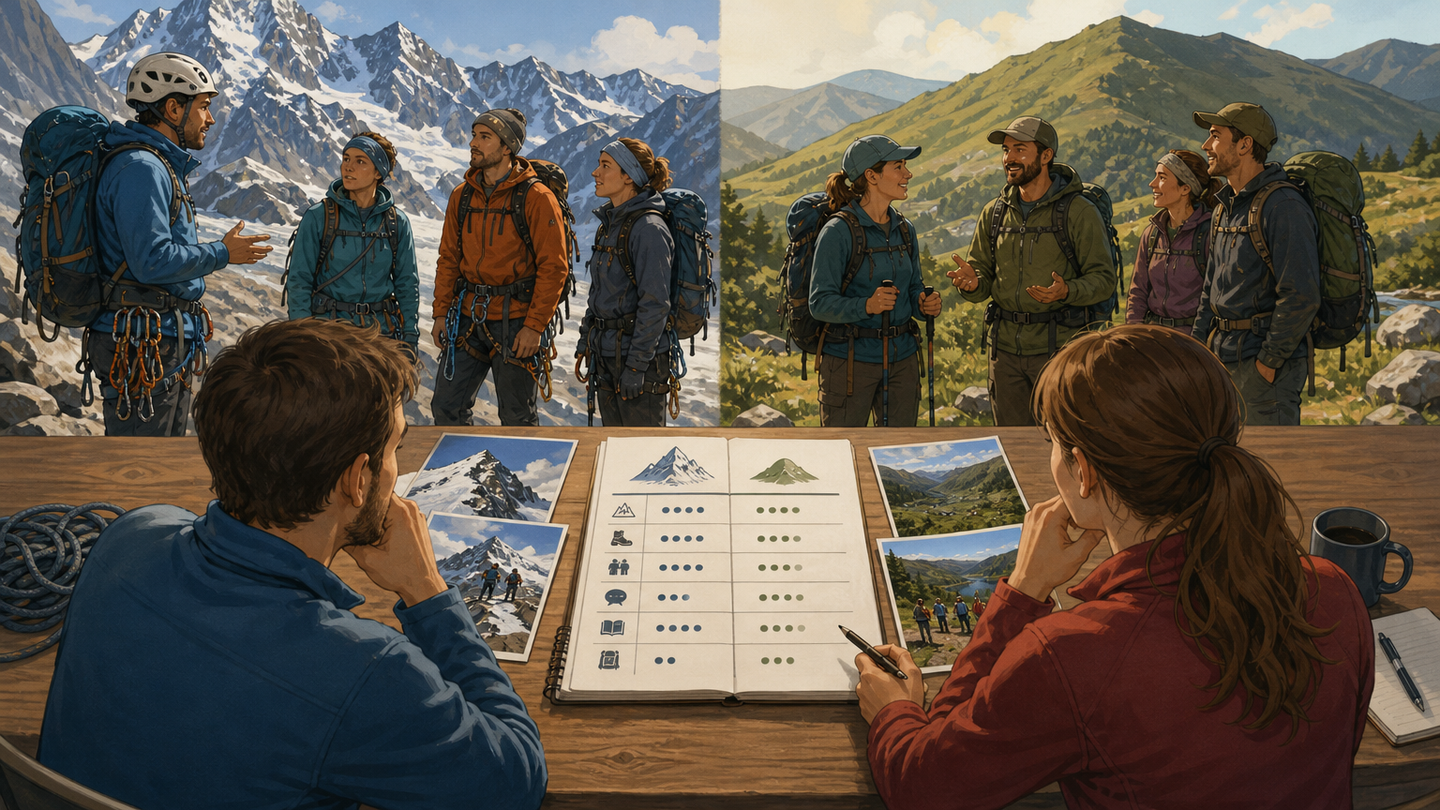
Defining the Alternatives
The first comparison is between the activities themselves. Hiking groups commonly center on day outings over established or informal routes. Backpacking groups add the demands of carrying overnight equipment, managing camps, and traveling for more than a day. Naturalist-oriented outings may put more emphasis on observation and interpretation than on pace or distance.
Mountaineering and technical climbing groups operate differently. Roped climbing on rock, snow, and ice involves specialized skills and equipment, and technical activities often have prerequisites. That does not make them better than hiking groups; it means the margin for joining before you are ready is smaller. A good progression can be to build comfort with hiking, navigation, weather decisions, and mountain travel before committing to activities that require technical systems.
Within a single organization, these categories may coexist. Do not assume that joining a mountaineering club means every outing is technical, or that a hiking club offers only easy walks. Read each activity description as its own invitation rather than relying on the organization’s name.
Meaningful Differences to Compare
How clearly trips are described
A useful trip listing tells you far more than a destination. Look for distance, elevation gain, anticipated pace, notable challenges, necessary gear, required skills, and conditioning expectations. These details reveal the real character of the day.
Distance alone is a weak comparison tool. A shorter route can be harder than a longer one when it is steep, rough, exposed, or undertaken with a heavier pack. Terrain, elevation gain, exposure, pack weight, and the skills needed to move safely all change what “difficult” feels like. Two outings with the same distance can therefore suit entirely different participants.
Trip ratings can help, but only when paired with the full description. Some organizations use a multi-level rating system; others describe difficulty in plain language. In either case, treat the rating as a starting point and examine the pace, terrain, equipment, and expectations behind it.
How leaders communicate expectations
Well-run group outings make the plan understandable before the trailhead. Participants should be able to learn the destination, intended pace, timetable, expected conduct, applicable rules, and what the leader expects the group to carry and know.
For a first outing, it is reasonable to have a direct conversation with the leader about difficulty, gear, logistics, and whether the activity suits your experience. This is not a test of bravado. It is a practical way to avoid joining a trip whose demands are unclear or beyond your current ability.
Also notice whether the group distinguishes between a social hike, a strenuous mountain day, an overnight trip, and a technical objective. Clear boundaries help participants choose appropriately and help leaders manage the group responsibly.
How the club approaches learning
Some people want an immediate community for regular hikes. Others want a longer learning path that may eventually include backpacking, snow travel, or technical climbing. Compare clubs according to the opportunities they actually offer, not the identity you hope they will provide.
A group with skill prerequisites may be the right choice if you want structured progression and are willing to meet its expectations. A hiking-focused group may be the better choice if your priority is fitness, companionship, route familiarity, or learning how to move thoughtfully in the outdoors. Neither path is a lesser version of the other.
Practical Tradeoffs: Challenge, Preparation, and Group Fit
The central tradeoff is between ambition and readiness. A more challenging trip can be rewarding, but it asks more of every participant: fitness, judgment, clothing, food, water, navigation awareness, and the ability to cope when the plan changes. Choose an outing based on the toughest relevant feature—not the most appealing feature in the description.
Before committing, consider the route’s distance, elevation gain, terrain, likely weather, available time, alternate routes, and your own condition and experience. Think about how you perform after several hours of sustained effort, not just how you feel at the beginning of a walk. If the answer is uncertain, selecting a less demanding outing is a sound decision, not a missed opportunity.
Preparation remains personal even when you are traveling with a club. Study the map and terrain, understand the basic plan, and let someone outside the outing know where you expect to be. Carry the Ten Essentials as systems for dealing with injury, changing weather, and unexpected emergencies. A phone can be useful, but service and battery life are not guaranteed, so it does not replace essential equipment or planning.
Groups should never be treated as a substitute for self-reliance. Rescue may be delayed or unavailable, and every participant should be ready for an unplanned problem rather than assuming another person will solve it. That mindset makes the group stronger: people arrive better equipped, communicate earlier, and make more realistic decisions.
Group size is another practical consideration. Limits and rules can vary by place and by type of travel, including day use, overnight use, and cross-country travel. A large affiliated group cannot necessarily sidestep a limit by dividing into smaller parties that follow the same route at the same time. Choose clubs and trips that take local rules seriously and organize within them.
Making the Decision
Start with the kind of outing you can complete comfortably and responsibly now. If you are new to group travel, a clearly described day hike with an attainable pace is often a useful first experience. It lets you see how a club communicates, how the group moves, and whether its culture suits you without adding the weight and complexity of an overnight or technical objective.
Then compare prospective clubs through a few practical questions:
- Are activities separated clearly by hiking, backpacking, and technical requirements? – Do postings explain distance, elevation gain, pace, terrain, gear, and required skills? – Can you discuss fit with a leader before participating? – Does the group communicate a plan and expectations clearly? – Does its style of outings match the challenge level and learning path you want?
Once you join an outing, contribute to the experience rather than consuming it. Arrive prepared, follow the agreed plan, communicate early if you are struggling, and respect the leader’s decisions about pace or turnaround. Responsible mountain recreation also means applying the seven Leave No Trace principles: plan ahead, travel and camp thoughtfully, manage waste, leave what you find, minimize fire impacts, respect wildlife, and be considerate of other visitors.
The right club is the one that gives you a realistic way to grow while treating preparation, communication, and care for the mountain environment as part of every outing. Verify local rules, conditions, access restrictions, and your suitability for a specific activity with official information and qualified local leaders before you go.
Information may contain errors, omissions, or outdated details. Confirm time-sensitive information with the relevant official or authoritative source.