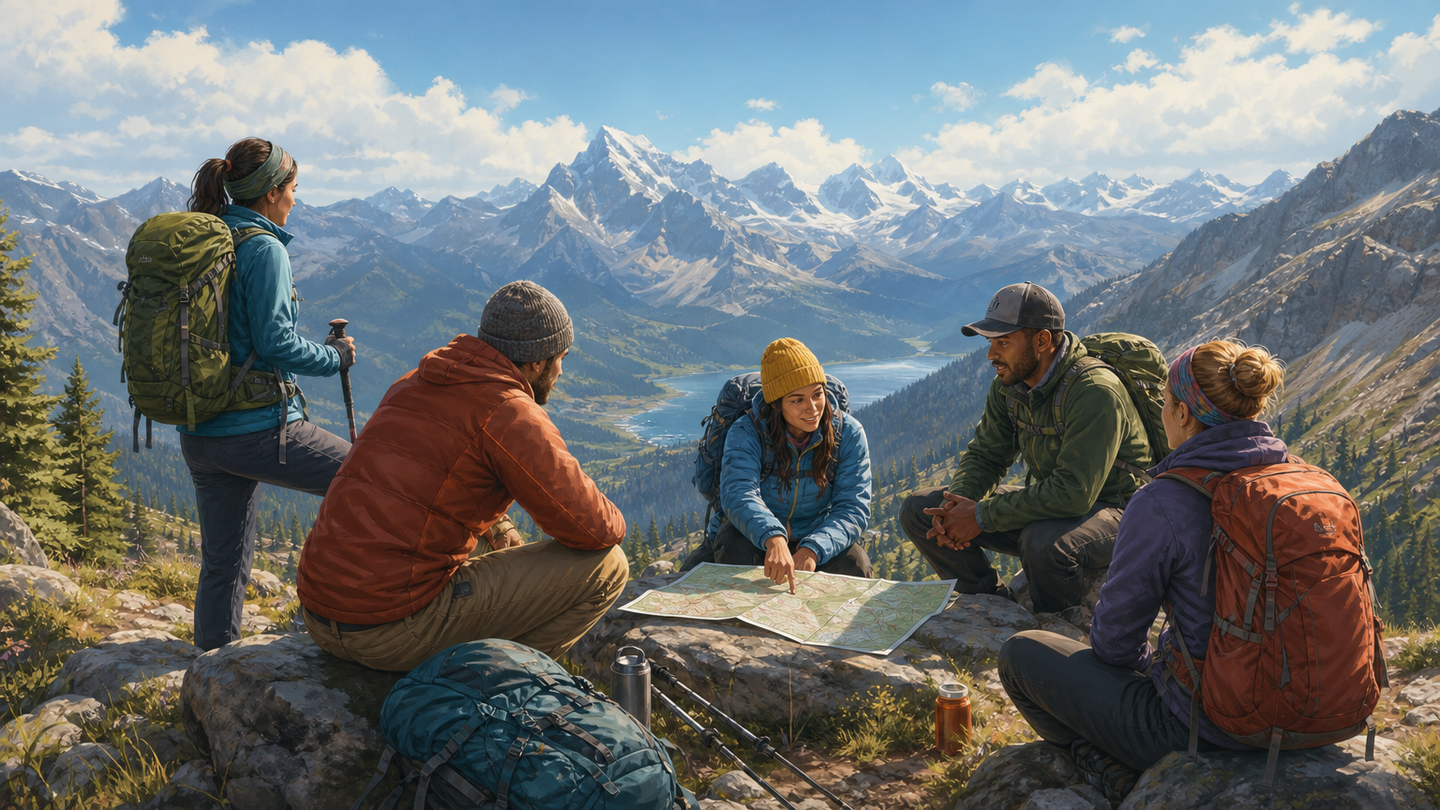
Mountaineering and hiking clubs bring people together for everything from straightforward day walks to backpacking, naturalist outings, and technical climbing. They can make mountain travel more social and more structured, but a group does not remove the need for personal judgment or preparation. In particular, technical climbing may involve roped travel on rock, snow, or ice and often has skill prerequisites, while hiking activities may call for a different level of experience and equipment. The right club outing is one that matches the route, conditions, and expectations with your own abilities.
What Clubs Add to Mountain Recreation
A good club creates a framework for people to travel together with a shared plan. That framework commonly includes a destination, intended pace, timetable, expectations, and applicable rules. It gives participants a clearer picture of what the day is meant to involve and helps the group move with purpose rather than as a collection of unrelated hikers.
Clubs also offer a useful progression. A person curious about mountain recreation may begin with hiking or naturalist activities, then gain comfort with route planning, outdoor systems, and group travel before considering more technical objectives. This progression matters because “mountaineering” can describe very different experiences. A hike on a maintained route is not interchangeable with an outing that involves steep terrain, exposure, snow, ice, or roped climbing.
The social value is real, but it should not be mistaken for a guarantee of safety. Each participant remains responsible for arriving prepared, communicating honestly, following agreed group practices, and making prudent decisions. Emergency planning should assume that help may not be immediate rather than treating rescue as part of the itinerary.
Choosing a Group and Outing That Fit
Start by looking at the kinds of activities a club offers. A broad program may separate hiking, backpacking, and naturalist activities from technical activities with specific skill expectations. That distinction is helpful: it lets you choose an experience that reflects where you are now rather than where you hope to be eventually.
Then read each trip description closely. The most informative postings describe the route distance, elevation gain, expected pace, terrain, notable challenges, required gear, relevant skills, and conditioning expectations. Together, those details tell a more useful story than a short label such as “moderate” or “challenging.”
Difficulty is not a single measurement. Distance matters, but so do steepness, exposure, terrain, the weight of your pack, and the skills the outing requires. A route that seems manageable on paper can become demanding when these factors combine. Consider the entire day: how long you expect to be moving, whether the footing will require concentration, how much climbing is involved, and how the route will feel when you are tired.
If the posting leaves uncertainty, speak with the trip leader before joining. A practical conversation can clarify the difficulty, equipment, logistics, and expectations. Be candid about your recent experience and current conditioning. This is not a test of confidence; it is how leaders and participants build a group that can travel at a workable pace.
Do not join a technical outing on the assumption that the group will teach every prerequisite during the trip. Some clubs provide instruction, but an outing may instead assume that participants already have particular skills. Ask what you need to know and demonstrate before committing, then choose an appropriate learning path if the route is beyond your present experience.
Preparing as a Capable Group Member
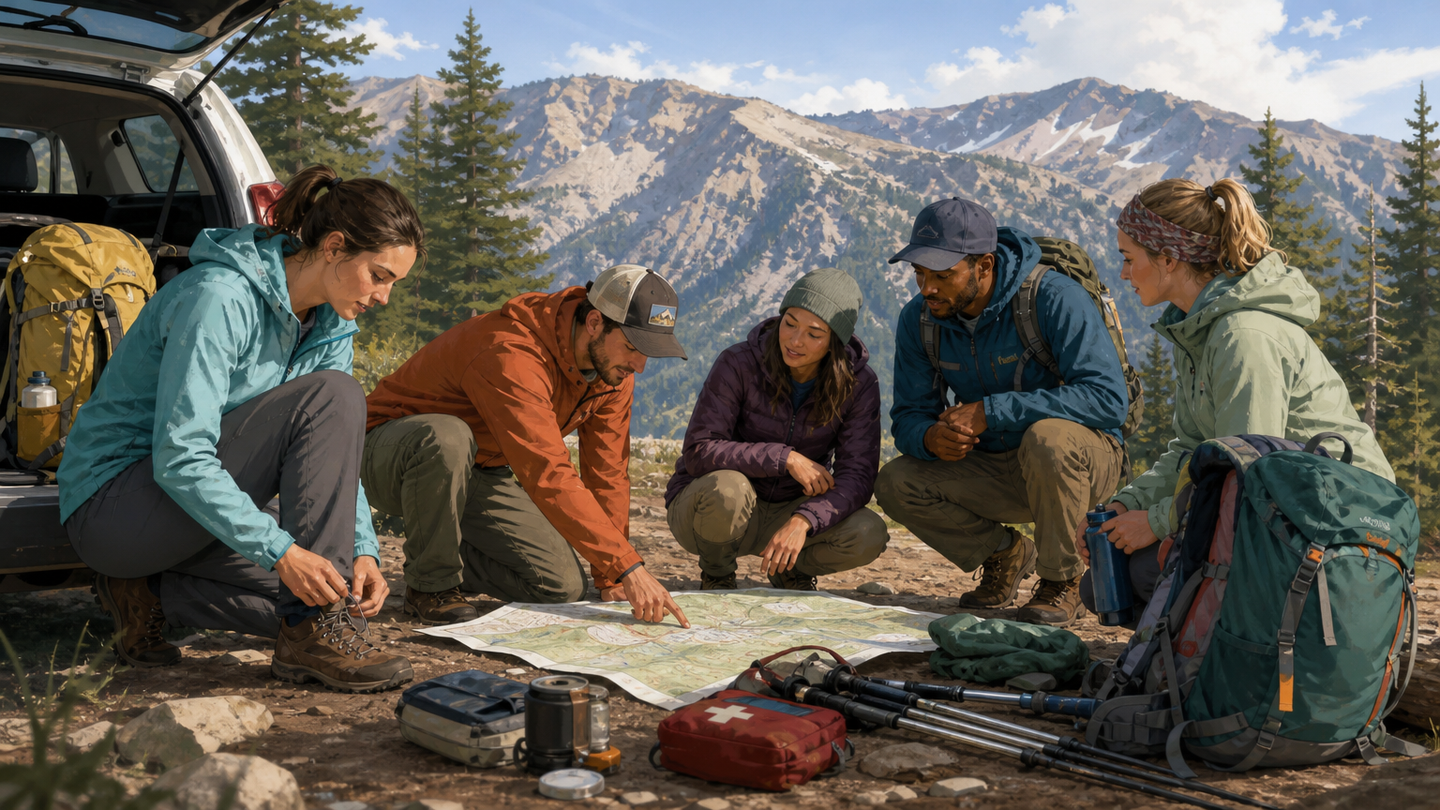
Preparation begins well before the trailhead. Study the route on a map and understand its terrain. Think through the time available, likely weather changes, and alternate routes or turnaround options. Share your plan with someone who is not on the outing, including where the group intends to go and when it expects to return.
Bring the Ten Essentials as a set of systems for handling injury, changing weather, and unexpected emergencies. The point is not merely to carry items; it is to have the means to navigate, protect yourself from the elements, manage basic first-aid needs, and sustain yourself if plans change. A phone can be useful, but it is not a substitute for these systems: service may be unavailable and battery power may run out.
Match your clothing, food, water, and gear to the route and expected conditions. The trip posting should guide this decision, especially when it identifies special equipment or skills. Pack deliberately rather than treating another participant’s supplies as your backup plan. Group travel creates opportunities to help one another, but every person should arrive equipped to take care of their own basic needs.
Physical preparation is equally specific. Conditioning for a route should reflect the distance, elevation gain, anticipated pace, and pack weight. A person comfortable walking on level ground may still struggle with sustained climbing or uneven terrain. Build experience gradually, and select outings that let you finish with control rather than exhaustion.
Sharing Responsibility Outdoors
Before setting out, make sure you understand the plan: the destination, intended route, pace, timetable, regrouping approach, and any applicable rules. Ask early if something is unclear. Once underway, communicate changes in energy, comfort, equipment, or concerns before they become a larger problem. A timely conversation is easier for a group to manage than a silent struggle far along the route.
Responsible group travel also means respecting the place you came to enjoy. The seven Leave No Trace principles provide a practical foundation for outdoor conduct. Plan ahead and prepare; travel and camp on durable surfaces; dispose of waste properly; leave what you find; minimize campfire impacts; respect wildlife; and be considerate of other visitors. These habits protect both the landscape and the quality of other people’s experience.
Group size rules can vary substantially by destination and by activity. Day hiking, overnight travel, and cross-country travel may be governed differently. Nor is it always acceptable to divide an oversized affiliated group into smaller parties and send them along the same route at the same time. Treat group limits as part of trip design, not as an inconvenience to solve at the trailhead.
A leader may coordinate the outing, but safe, considerate travel is a shared practice. Stay aware of the group’s pace and cohesion, follow the agreed plan, and avoid pressuring others to continue beyond a sensible turnaround point. The goal is not simply to reach a summit or endpoint; it is to make sound decisions throughout the day.
Turning Club Participation Into Lasting Mountain Skills
The best use of a hiking or mountaineering club is active participation. Read the outing description, choose a suitable challenge, prepare thoroughly, show up ready to contribute, and reflect on what the terrain and pace taught you. Over time, that cycle develops a clearer sense of which objectives fit your interests and which skills deserve further attention.
There will always be uncertainty in mountain travel. Weather can change, routes can feel harder than expected, and a group’s needs may differ from the original plan. Good preparation does not eliminate those realities; it gives you and your companions better options when they arise.
Before committing to any outing, confirm the current route conditions, access rules, weather, and suitability with the club, land manager, and qualified local leaders. Used thoughtfully, a club can be more than a way to find companions—it can be a setting for steady learning, respectful travel, and mountain days shaped by sound preparation.
Information may contain errors, omissions, or outdated details. Confirm time-sensitive information with the relevant official or authoritative source.