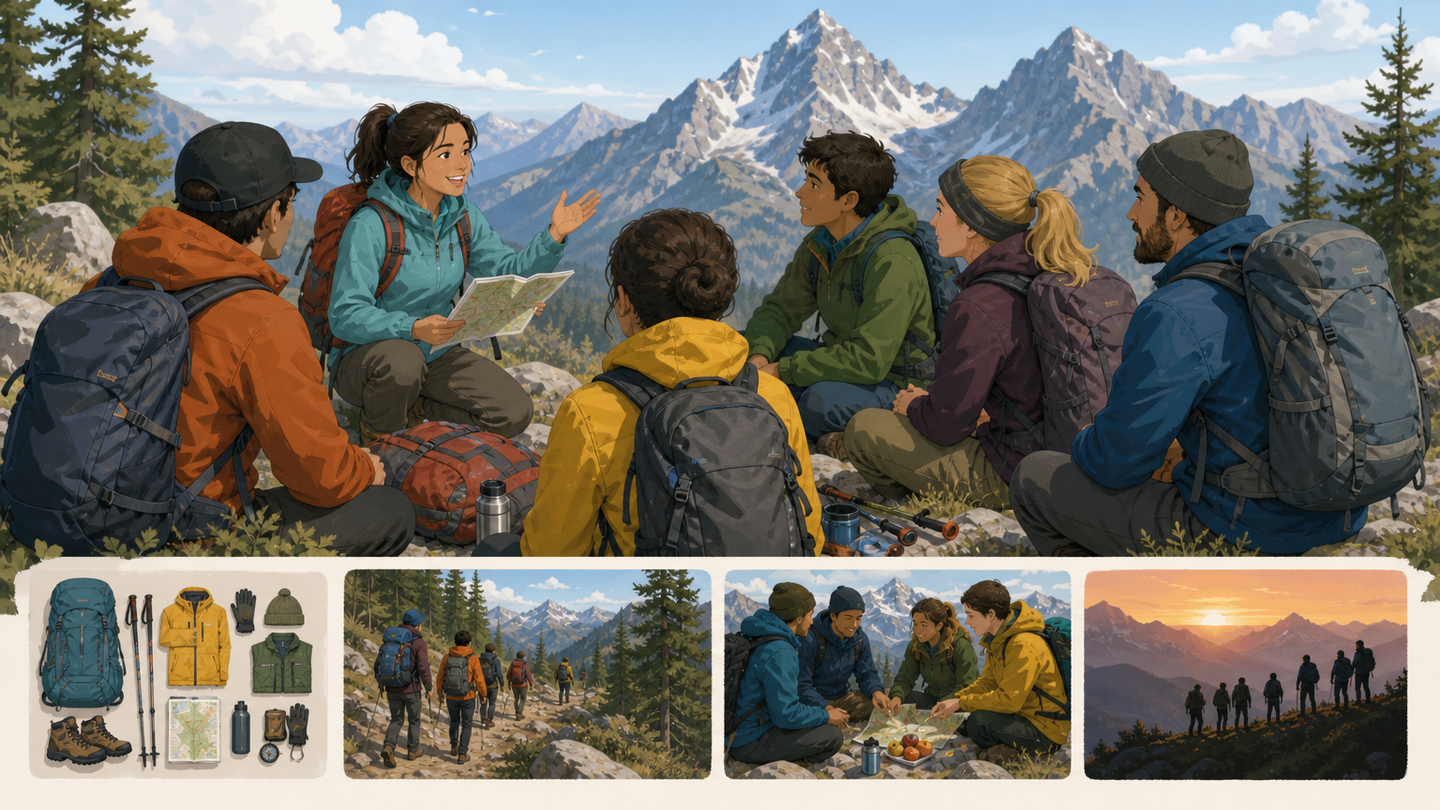
Joining a hiking or mountaineering club can make the mountains feel more accessible. A group outing offers shared route planning, a stated objective, and companions who are working toward the same destination. It also asks you to take responsibility for your own preparation. The most satisfying first trip is rarely the most ambitious one; it is the one that matches your present fitness, experience, equipment, and comfort with the day’s demands.
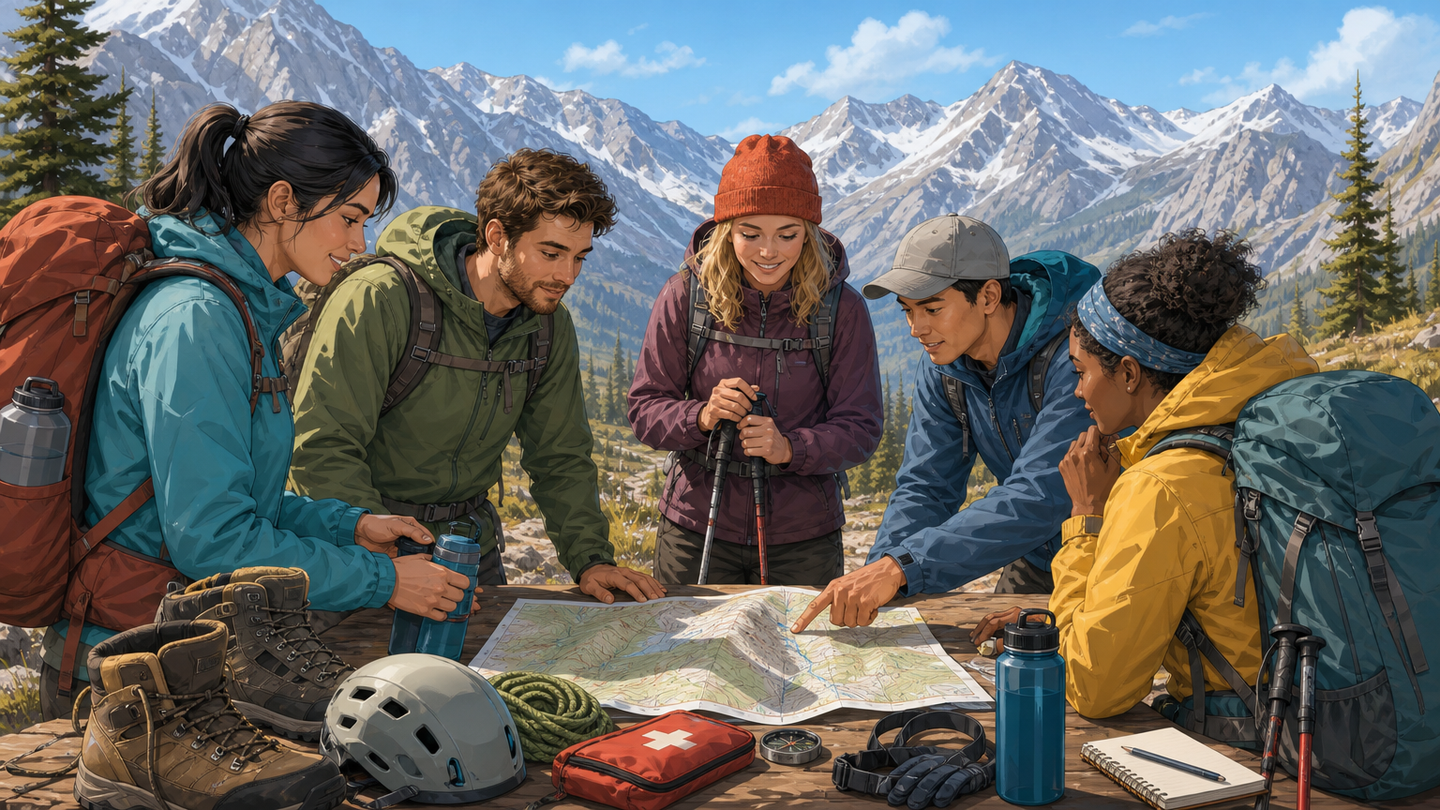
Before the First Experience: Choose the Right Kind of Outing
Start by separating hiking from technical mountaineering. Hiking, backpacking, and naturalist activities may be offered as distinct activities, while technical climbing often carries skill prerequisites. Climbing can involve roped travel on rock, snow, or ice, so a listing described as a climb may call for knowledge and equipment beyond what a capable day hiker normally uses.
For a first club experience, read every part of the trip description rather than focusing only on the destination. A useful posting explains the route’s distance and elevation gain, expected pace, major challenges, required gear, relevant skills, and conditioning expectations. These details show what the day will actually feel like. A modest distance can be demanding on steep ground, rough terrain, or exposed slopes; a longer route may be manageable when the pace and terrain are easier.
Difficulty labels are helpful starting points, not personal guarantees. A trip’s challenge can change with terrain, steepness, exposure, pack weight, and the skills it requires. Consider the entire combination. Ask yourself whether you can sustain the stated pace while carrying the expected load and still make careful decisions late in the day, when fatigue matters most.
A good first choice is an outing where you have room to learn rather than one that requires you to prove something. It is sensible to begin with a hike that is within your established ability, then build toward longer, steeper, more remote, or more technical objectives as your experience grows.
What to Expect From a Well-Run Group
A club trip is a shared plan, not a collection of individual itineraries. Before the outing, expect communication about the destination, route, timetable, pace, expectations, and rules that apply to the area. On the day, the group may gather at a designated place, review the plan, and move according to the leader’s system for keeping people together.
Group travel requires flexibility. Weather, trail conditions, a participant’s condition, or slower-than-expected progress can change the plan. Turning around, choosing an alternate route, or ending an objective early is not a failed outing. It is often the sound judgment that preserves the group’s margin for a safe return.
Leaders organize the trip, but they do not remove outdoor risk or take over each participant’s personal responsibilities. Come ready to follow the agreed plan, communicate early if you are struggling, and make decisions that support the whole group. If you discover that the trip is not a fit before it begins, withdrawing is more considerate than hoping the group can absorb a mismatch on the trail.
Prepare for the Day You May Have, Not Only the Day You Expect
Preparation begins at home. Study the route and terrain, consider the available time and possible alternate routes, account for weather, and leave your plan with someone who is not on the outing. Think through distance, elevation gain, terrain, and the condition and experience of everyone involved—not simply the appeal of the objective.
Carry the Ten Essentials as a set of systems for dealing with injuries, changing weather, and unexpected emergencies. The exact items should suit the outing, but the point is to be capable if the plan takes longer than expected or conditions deteriorate. A phone can be useful, but it is not a substitute for those essentials: service may be unavailable, and batteries do not last indefinitely.
Bring the gear the trip requires, and learn how to use it beforehand. Do not make a demanding group outing the first time you test footwear, layers, navigation tools, or a heavily loaded pack. If specialized equipment or skills are listed, treat them as entry requirements rather than optional upgrades. Ask whether a beginner-oriented outing, training opportunity, or less technical trip would be a better place to start.
Conditioning is equally practical. The goal is not simply to finish the route; it is to travel steadily, stay warm or cool as conditions require, eat and drink, and retain enough energy for the descent or return journey. Build gradually through outings that resemble the demands you plan to take on next.
Questions Worth Asking Before You Commit
A brief conversation with a trip leader can clarify whether an outing suits you. Be straightforward about your experience, including what you have done recently, what terrain you know, and any aspect that makes you uncertain. Clear information helps a leader describe the trip accurately and helps you avoid arriving underprepared.
Useful questions include:
- What pace does the group intend to maintain? – What route conditions or features are likely to be the hardest? – What equipment is required, and which items must I already know how to use? – Are there skills or conditioning expectations beyond ordinary hiking? – What is the turnaround plan if weather, timing, or group condition changes? – What rules apply to the route, wilderness area, or overnight travel?
Ask early, listen carefully to the answers, and accept a recommendation to choose a different outing. That is not a judgment on your potential. It is a practical match between today’s preparation and a particular objective.
Responsible Mountain Travel Is a Group Skill
Responsible outings protect both people and places. Leave No Trace provides seven principles for outdoor recreation, and their value becomes especially clear with a group: plan ahead, travel and camp thoughtfully, manage waste properly, respect wildlife, and be considerate of other visitors. A club’s presence should not turn a quiet route into a larger impact on the landscape.
Group size is not merely a social preference. Rules can differ by destination and by type of travel, including day use, overnight travel, and cross-country travel. Do not assume an oversized group can solve a limit by splitting into smaller parties that take the same route on the same day; some wilderness rules specifically restrict that practice for people traveling under a shared affiliation.
Keep the group informed. Tell the leader promptly if you feel unwell, have equipment trouble, need a break, or notice a developing problem. At the same time, avoid separating from the group without a clear agreement. Good communication lets small issues be addressed while there are still easy options.
Starting With Confidence
Your first club outing is an opportunity to learn the rhythms of group travel: reading a trip listing closely, arriving properly equipped, moving at an agreed pace, adapting to conditions, and treating a turnaround as a responsible choice. Choose an objective that leaves capacity for those lessons, contribute to the group with honesty and preparedness, and let experience build one well-matched outing at a time. Before you go, confirm the current requirements, conditions, access rules, and your suitability with the club and qualified local leaders.
Information may contain errors, omissions, or outdated details. Confirm time-sensitive information with the relevant official or authoritative source.